We use cookies to make your experience better. To comply with the new e-Privacy directive, we need to ask for your consent to set the cookies. Learn more.

Packing Station Design that Removes the Bottleneck
June 5, 2017
|
Categories: Blog
Every order must go through a packing station before heading out for delivery. If order-packing processes are slow, you can’t optimize throughput — and may even fall short on customer expectations, putting your whole business at risk.
So how do you avoid bottlenecks at the packing stage? Start with smart operational design. Optimal workflows, good ergonomics, and the right packing station infrastructure can keep your orders moving on schedule. If you run a distribution center that packs orders of multiple types, that means creating multi-item packing stations with enough flexibility to handle combined orders of all sizes and shapes.
Here are a few tips for designing — or redesigning — multi-item packing stations that remove logistics bottlenecks.
1. Ergonomics comes first.
When you build workstations to fit the worker's body, you eliminate risky and time-consuming repetitive motions. That reduces injuries and increases productivity simultaneously.
"But every employee is different," you may object. "How can we build workstations that sit at the right height when the target keeps moving?"
This is where the warehouse equipment comes into play. Install adjustable-height surfaces, such as lift tables from Solus Group, to quickly prepare safe, ergonomic workstations for staff members of all sizes.
2. Limit or remove steps per package.
Packers need access to a lot of different materials. They must grab newly printed shipping labels, scanners, boxes of all sizes, and padding. In the poorly thought-out packing station, these things are lined up on a table, requiring the packer to take 10 or 15 steps for each box they send to the shipping room.
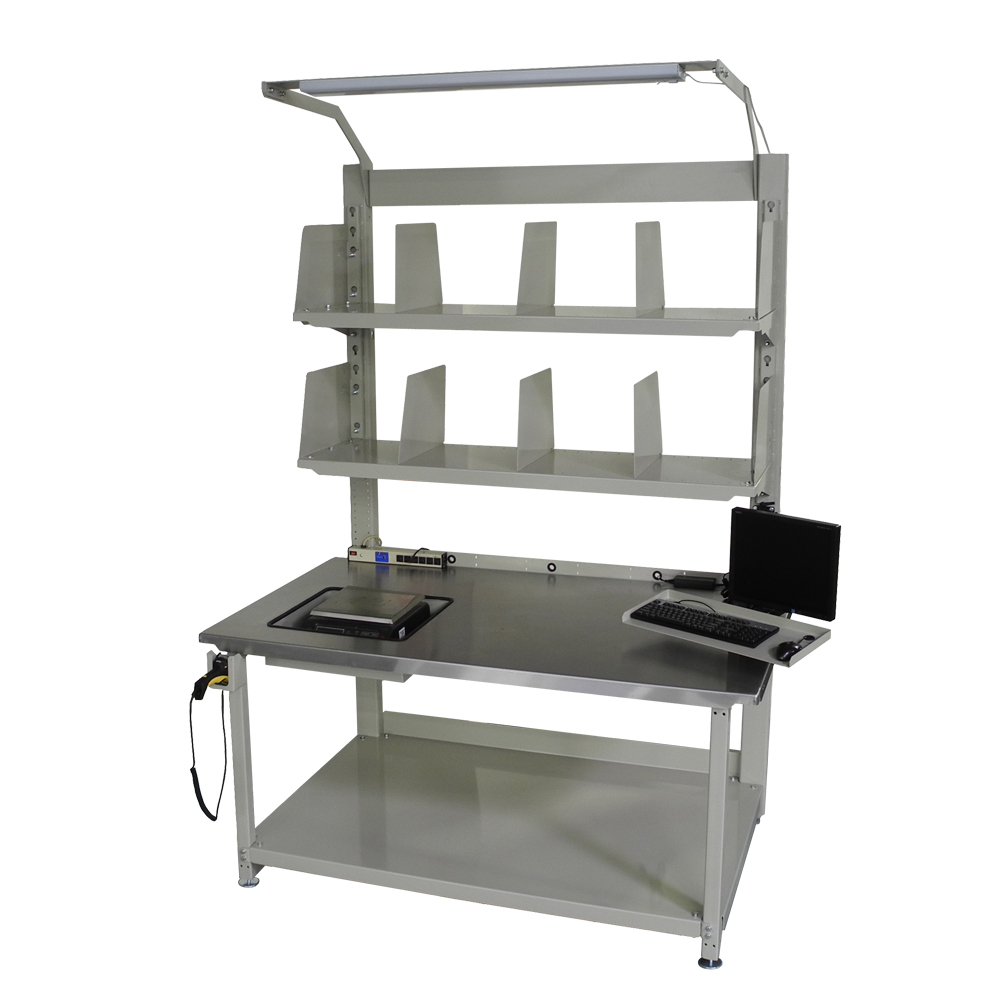
That's dangerous and inefficient. Instead, place everything at the employee's fingertips with a dedicated packing desk from Solus Group. These customizable workstations arrive with slots for packing materials, computers, scanners, printers, and more. They even have optional counter cutout for scale to further reduce lifting.
3. Design different stations for different SKUs.
Workstations should be adjustable to fit each employee. If you don’t build appropriate multi-item packing stations, however, your packing desks must also be designed for the products that will pass through them.
Install lift tables in one station to prevent staff from lifting large, heavy SKUs. For small, assorted products, a tilt table can prevent bending and reaching. Plan routes for each type of SKU that you handle and watch productivity soar.
4. Integrate picking and packing with portable packing carts.
One of the most radical changes that distribution centers implement involves integrating picking and packing into a single movement.
To try this in your facility, start with a high-quality, dependable picking cart. Install a tablet and a small portable printer for shipping labels, then lay out boxes planned out for the entire wave of picking.
That way, pickers can place SKUs directly into their boxes, print the shipping labels, and deliver packages straight to the shipping room.
Using Packing Station Design to Boost Safety and Efficiency
The magic of ergonomic warehouse equipment at packing stations is that it benefits employees and productivity simultaneously. When staff don't have to engage in risky behaviors, such as reaching, bending, and lifting unassisted, they develop fewer musculoskeletal disorders. That keeps them comfortable and motivated. They end up getting more done with less stress.
As the warehousing industry continues to advance, there will be new solutions that will help packing teams get orders out the door. It doesn't look like we'll ever return to the days of packing stations made of nothing but folding tables, and that's something we should all celebrate.
Buy multi-item packing stations like the Shipping & Receiving Desk from Solus Group.