We use cookies to make your experience better. To comply with the new e-Privacy directive, we need to ask for your consent to set the cookies. Learn more.

What Is Tepid Water for Eyewash Stations?
January 7, 2025
|
Categories: Blog
Virtually every industrial facility must provide eyewash and/or shower stations, and those stations should have a sufficient supply of tepid water. But what is tepid water, and is it actually part of the OSHA standard?
As with many regulatory questions, the answer is slightly complicated. In 29 CFR 1910.151(c), Occupational Safety and Health Administration (OSHA) requires that:
"Where the eyes or body of any person may be exposed to injurious corrosive materials, suitable facilities for quick drenching or flushing of the eyes and body shall be provided within the work area for immediate emergency use.”
That doesn’t mention “tepid water" anywhere, but it does mention “suitable facilities.” OSHA leaves some room for interpretation — but in its own interpretive letters, the Administration strongly indicates that eyewash equipment should follow the American National Standards Institute (ANSI) standard Z358.1. Doing so can help you avoid OSHA citations during inspections.
What Does ANSI Say About Water Temperature in Eyewash Stations?
ANSI is a private organization, and we cannot reprint its standards in their entirety (you can purchase ANSI Z358.1-2014 here).
But for the purposes of this article, the key requirement is the temperature range: Safety showers and related emergency fixtures should maintain a lukewarm water temperature of 60 to 100 Fahrenheit (16 to 38 degrees Celsius). For the best results — and a reliable level of compliance across industrial environments — it’s advisable to stick to the middle of that range, near room temperature or slightly below the body temperature.
In other words, water must be “tepid,” and for obvious reasons: After a chemical spill or, worse, a chemical burn, workers should feel comfortable rinsing their eyes and skin for the first aid flushing period of at least 15 minutes. If water’s too hot or cold, it could make injuries worse, causing thermal shock or accelerating chemical absorption through the skin.
Do Emergency Wash Stations Need to be Plumbed In?
In blogs, ANSI has noted that there are “certain circumstances in which a facilities safety/health advisor should be consulted for optimum temperature,” but in general, the range of 60 to 100 degrees Fahrenheit is sufficient.
Maintaining proper temperature control across a facility's water system often involves installing a thermostatic mixing valve to blend hot water and cold water supply lines. In plumbed installations, a dedicated storage tank can supply tepid fluid; however, systems must be monitored to ensure temperatures do not promote bacterial growth.
This does not mean that every emergency shower or eyewash station needs to be plumbed in or equipped with tempering valves to maintain strict temperatures — as long as flushing fluids remain within the tepid range, accessibility remains the core priority in industrial safety. Most safety standards reflect this.
When outfitting your facility, keep these concepts in mind:
- Access: Employees must be able to access the shower/eyewash stations within 10 seconds of exposure to hazardous chemicals. As we’ve discussed in other articles, that means that stations should be within 55 feet of each potential place of exposure.
- High Visibility: Showers and safety stations must be highly visible. In other words, workers shouldn’t have to think about where they’re going in an emergency — bright colors and clear signage are key.
- Training: Workers should be trained on the correct usage of the showers/safety stations.
- Flow Rate: Eye washes must maintain a minimum water flow rate of 0.4 gallons of water per minute. Combination eye-and-face wash units must supply at least 3 gallons of water per minute.
Portable eyewash stations are often essential gear for meeting these requirements. It’s not always possible to plumb in showers — and if the location of the hazardous materials changes frequently, plumbing isn’t an option.
Find Emergency Safety Showers and Eye Wash Stations for Your Facility
Solus Group carries a range of emergency stations to keep your facility safe and improve OSHA compliance. All products are built to meet ANSI standards, with clear signage and simple controls to aid employees in an emergency. Options include:
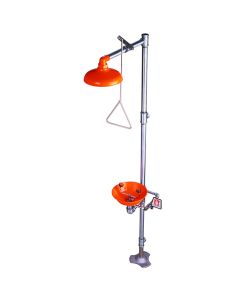
Shower Eye Wash Stations
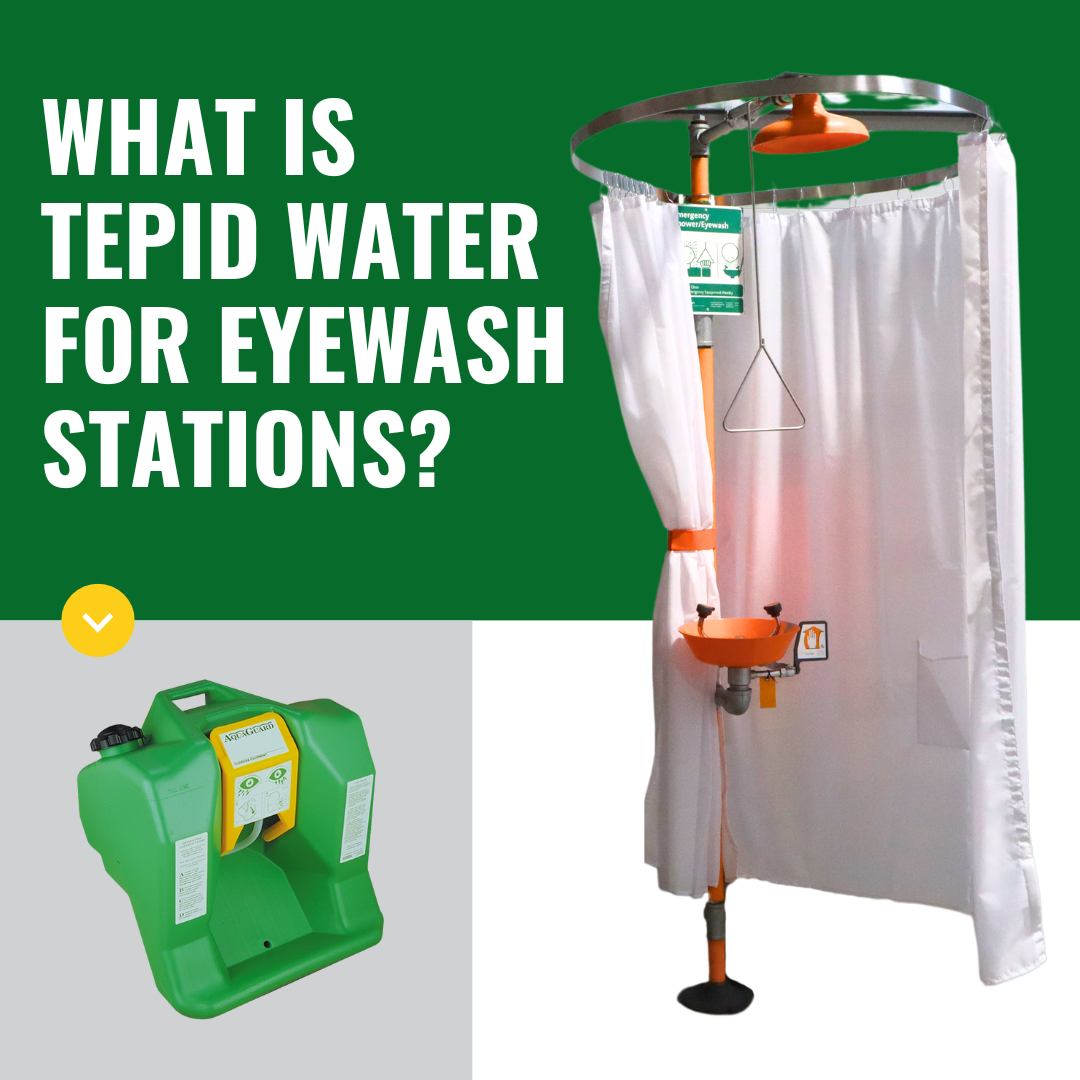
This plumbed-in, floor-mounted unit combines a safety shower and eye wash station for full-body decontamination. Available with an optional privacy curtain.
Buy Shower Eye Wash Stations from Solus Group
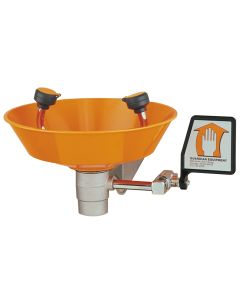
Wall Mounted Eye Wash Stations
These permanently installed stations connect to existing plumbing and meet ANSI Z358.1 standards. Features include a self-regulating valve for optimal spray pressure, stay-open ball valves, and a filter with a float-off dust cover for reliable performance.
Buy Wall Mounted Eye Wash Stations from Solus Group
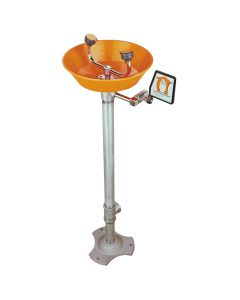
Pedestal Mounted Eye Wash Stations
Ideal when a wall is not available within 55 feet of a hazard zone, these freestanding units offer a permanent, plumbed solution that complies with OSHA and ANSI requirements.
Buy Pedestal Mounted Eye Wash Stations from Solus Group
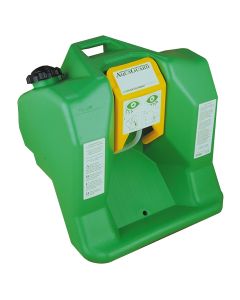
Portable Eye Washes
Perfect for areas without plumbing, these self-contained units feature a 16-gallon reservoir and dual spray nozzles. They provide 15 minutes of flushing at 0.4 gallons per minute, exceeding ANSI requirements. Each unit includes a bacteriostatic additive to preserve the solution for up to six months.
Buy Portable Eye Washes from Solus Group
For assistance selecting the right station for your needs, contact Solus Group at 314-696-0200.
Related Products