We use cookies to make your experience better. To comply with the new e-Privacy directive, we need to ask for your consent to set the cookies. Learn more.

Caution Tape for Job Site Hazards - OSHA Standards and Specifications
February 3, 2026
|
Categories: Blog
According to the Bureau of Labor Statistics, falls, slips, and trips accounted for 16.5% of all fatal occupational injuries in 2023. By clearly demarcating restricted zones, businesses can significantly reduce the risk of those incidents.

However, choosing the right caution tape requires a solid understanding of the OSHA standards in play. Sub-standard materials or incorrect color schemes can lead to a failure in hazard awareness — and more importantly, could lead to serious injuries.
Here’s a breakdown of all of the key factors to consider when outfitting your facility.
Feature #1: Compliance with OSHA Safety Color Codes
The color of caution tape must adhere to the specific hierarchy of hazard communication. OSHA standard 1910.145, “Specifications for accident prevention signs and tags," is the primary regulation governing the design and wording of these barriers, along with OSHA 1910.144, “Safety color code for marking physical hazards.”
That’s fairly straightforward — but of course, it gets more complicated. OSHA incorporates ANSI standards by reference through an intensive rulemaking process; ANSI standards are more in-depth, and while they’re written by an independent organization, they’re effectively rules for compliance.
For compliance with OSHA and ANSI, signage and tape should use the following colors:
- Yellow is the designated basic color for caution and for marking physical hazards that could result in minor or moderate injury, such as striking against, stumbling, or tripping.
- Orange is the designated color for "Warning," indicating a hazard level between Caution and Danger — specifically, hazards that could result in death or serious injury.
- Red is designated for "Danger," indicating immediate hazards that will result in death or serious injury, as well as fire protection equipment.
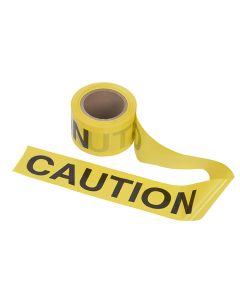
At Solus Group, we provide caution tape that utilizes this high-visibility yellow background paired with bold black lettering to meet ANSI Z535 and OSHA requirements. That combination is reserved for hazards that could result in minor or moderate injury.
Feature #2: Material Durability and Weatherproofing
Job site hazards are often located in harsh environments, so the tape's material must be engineered to withstand the elements. Look for tape manufactured from heavy-duty polyethylene or PVC, which provides resistance to moisture, humidity, and chemical exposure.
High-quality caution tape should remain pliant even in extreme cold, preventing it from becoming brittle and snapping in outdoor applications. A durable, non-adhesive design allows the tape to be tied securely to bollards, stakes, or structural equipment without losing its structural integrity over time.
Feature #3: High-Contrast Messaging and Legibility
OSHA 1910.145 requires that the wording on any safety barrier be concise and easy to read. To achieve this, ANSI Z535.5 provides specific viewing distance formulas to ensure the "CAUTION" legend is legible before a worker enters the hazard's reaction zone.
Language barriers can make signage less effective, so we recommend utilizing tape that includes universal symbols or bilingual messaging to ensure that all staff members — regardless of literacy level or primary language — can instantly understand the warning.
Safety Solutions from Solus Group
To meet the rigorous demands of industrial and construction sites, Solus Group provides a comprehensive range of hazard identification tools. Every product is selected to help your operation achieve peak efficiency while maintaining strict compliance with OSHA and ANSI standards.
- Caution Tape (3" x 1000' Roll): This heavy-duty, contractor-grade roll is designed for maximum visibility and long-term durability in outdoor or indoor environments. The yellow background and black "CAUTION" print provide a standard-compliant solution for marking off physical hazards.
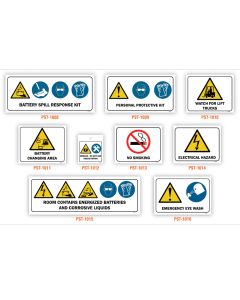
- Signage and Posting Kits: Specifically designed for high-risk areas like battery rooms, these kits include nine OSHA-compliant signs to warn of electrical hazards, corrosive liquids, and the location of emergency equipment.
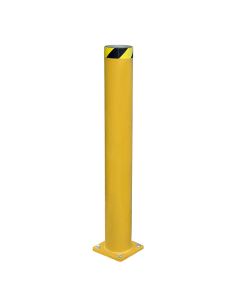
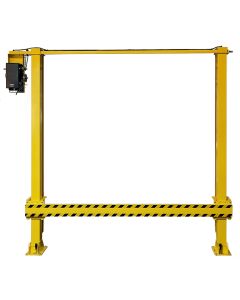
- Safety Bollards and Powered Dock Gates: For more permanent traffic control, these physical barriers protect pedestrians from forklift traffic and prevent falls from open dock edges.
Ready to outfit your operation with a secure hazard communication system?
Contact the Solus Group sales team today to discuss your site's unique requirements or to learn more about custom configurations. Call us at 314-696-0200 or send us a message online to get started.
Related Products