We use cookies to make your experience better. To comply with the new e-Privacy directive, we need to ask for your consent to set the cookies. Learn more.

Drum Spill Containment and Leak Control
November 11, 2025
|
Categories: Blog
Effective drum spill containment stops a minor leak from escalating into a costly disaster. A rapid response protects personnel from chemical exposure and prevents environmental contamination — and minimizes operational downtime.
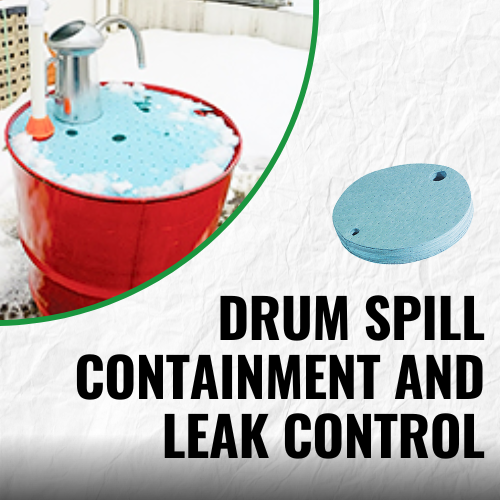
The best approach is fairly simple: Outline your spill response strategy as early as possible and provide your team with the supplies they need to handle spills effectively.
In this article, we’ll provide an overview of a drum spill containment strategy and explain how to ensure a fast, safe, and compliant response. For help with spill response outfitting, call 314-696-0200 to speak with a member of our team.
Step 1: Assess the Hazard and Control the Area
Make sure your workers have the personal protective equipment (PPE) they need for any hazardous chemicals in your facility, regardless of whether those chemicals are well-contained.
Reference the drum's label or the corresponding Safety Data Sheet (SDS). The SDS will tell you what types of personal protective equipment (PPE) your workers need. OSHA standards require employers to assess workplace hazards and provide appropriate PPE to protect employees.
For handling hazardous chemical leaks, look for comprehensive, pre-packaged PPE kits. A well-equipped kit should include:
- Hand Protection: Chemical-resistant gloves, made of appropriate materials such as neoprene or nitrile.
- Eye and Face Protection: Safety goggles and a full face shield.
- Body Protection: An acid-resistant apron or a full-body chemical coverall.
- Foot Protection: HAZ-MAT boots or chemical-resistant overboots.
To learn more, read: Which PPE Kit Is Right For Your Application?
Step 2: Contain the Spill's Spread
With PPE donned, the immediate goal is to stop the liquid from spreading. Every second counts in preventing the spill from reaching drains, walkways, or sensitive equipment.
To do this, create a dike around the perimeter of the spill. Look for absorbent socks or booms. These are flexible, tubular sorbents designed specifically to create a barrier. By surrounding the spill, you can corral the liquid into a manageable area, making cleanup far more efficient.
Related: What Are Sorbent Socks? A Spill Containment FAQ
Step 3: Stop the Leak at the Source
Containing the spill is a temporary fix if the drum itself is still leaking. To prevent further product loss and minimize the size of the spill, you need to stop the leak at its source.
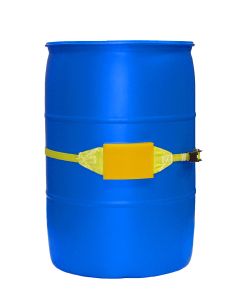
For punctures or cracks, you must have a solution for actively patching the drum. A Drum Barrel Patch provides an excellent solution; designed for quick application, patches are chemical resistant and can provide an instant stop to the leak, even on a wet or dirty surface.
Step 4: Absorb, Clean, and Neutralize the Spill
Once the active leak is stopped and the spill is contained, you must safely clean up the pooled liquid. Use the correct sorbent to absorb the material and return the floor to a safe, dry condition, in line with OSHA's housekeeping standard.
The type of sorbent you use is critical:
- For Oils and Fuels: If the spill involves petroleum-based hydrocarbons, use oil-selective sorbents. These are typically made from polypropylene, a polymer that is oleophilic (attracts and holds oil) and hydrophobic (repels water). Look for oil-selective pads and rolls to soak up the bulk of the spill.
- For Acids: Corrosive spills require neutralizing sorbents. Products like AcidSafe are specifically formulated to not only absorb the acid but also render it non-hazardous while visually confirming the neutralization via a color-change indicator.
- For General Chemicals: Universal sorbents are designed to handle a wide range of liquids, including coolants, solvents, and water-based fluids. These are excellent for managing non-aggressive spills.
- For Residual Cleanup: After using pads, loose sorbents can be sprinkled over the area to manage any remaining residue and improve traction on the slick surface.
For additional guidance, read: Absorbent Pads for Chemical Spills: A Buyer's Guide
Step 5: Ensure Compliant Disposal
The job is not finished until the hazardous waste is properly managed. A critical rule of spill response is that used absorbent materials take on the hazardous properties of the liquid they have absorbed.
Your spill kit must include the necessary items for disposal. This includes heavy-duty, chemical-resistant disposal bags and ties for collecting the saturated sorbents.
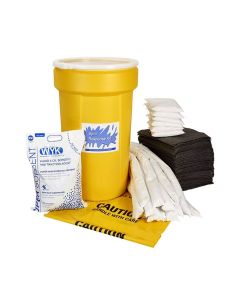
For maximum compliance, look for spill kits that are packaged in UN/DOT-compliant drums or pails. Compliant containers can be used for the secure and compliant transport of the hazardous waste per federal, state, and local regulations.
Spill Containment Solutions from Solus Group
At Solus Group, we provide comprehensive solutions designed to handle virtually any spill scenario, ensuring a fast, safe, and compliant response.
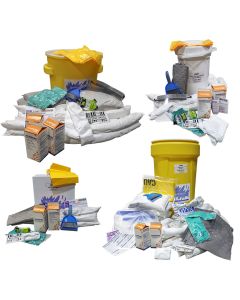
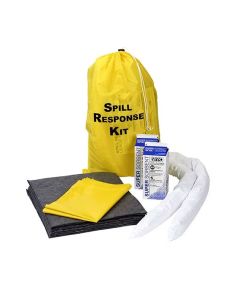
- Spill Response Kits: We offer a full range of complete spill kits to address specific hazards. Our Universal Spill Kits handle common industrial fluids, while Oil-Selective Spill Kits are essential for hydrocarbon spills. We also provide specialized Battery Acid Spill Kits that include neutralizers and PPE.
- Polypropylene Industrial Grade Pads & Rolls (PIG-PR): Ideal for stocking cleanup stations, these industrial-grade pads and rolls are made from oil-selective polypropylene. They are perfect for absorbing oil-based spills or for wiping down machinery.
- Drum Barrel Patch: This emergency, stick-on patch provides an instant, temporary repair for leaking drums. It is a critical component for stopping a leak at its source, preventing further product loss and environmental damage.
- Personal Protective Equipment (PPE) Kits: Ensure your team is ready with our pre-packaged PPE kits. The Personal Protective Kit (PK-1200) is specifically designed for chemical hazards, including a face shield, goggles, acid-resistant apron, HAZ-MAT boots, and neoprene gloves.
Ready to outfit your operation with a compliant drum spill containment strategy? A spill is a near certainty, but a costly disaster is optional.
Ensure your team is prepared with the right equipment. Call the Solus Group sales team at 314-696-0200 or send us a message to discuss your facility's specific spill response needs.
Related Products