We use cookies to make your experience better. To comply with the new e-Privacy directive, we need to ask for your consent to set the cookies. Learn more.

Forklift Battery Room Lessons for Electric Industrial Vehicles
October 28, 2025
|
Categories: Blog
Just as AI is changing the way we work with data, physical automation is changing the way we move materials. Most forecasts — from Grand View, Mordor, GMI, and more — project a compound annual growth rate (CAGR) of 15 to 20 percent for the global warehouse automation market through 2030 or so.
Meanwhile, more than half of the “service robots” sold in 2023 went to work in the logistics industry. Sales of automated guided vehicles (AGVs), automated mobile robots (AMRs), and similar technologies went up by 25 percent that year alone.
Most of that automated material handling equipment relies on electric power — not diesel, propane, or even hydrogen. There are lots of advantages to electric material handling fleets, but they also carry a fresh set of challenges and questions.
For example:
- How can warehouse managers keep all their equipment charged, especially when more of it than ever needs a place at the charger?
- How do you install charging and maintenance equipment without losing valuable floorspace?
- What’s better, a regular schedule or opportunity charging?
The good news is that we don’t have to figure it all out from scratch. There may be more electric industrial fleets than there used to be, but electric power is by no means new to material handling equipment.
In fact, the venerable forklift has been running on batteries for over 100 years and getting more popular all the while. More than two thirds of industrial trucks sold in the U.S. in 2023 were electric.
Lead-acid forklift batteries still have something to teach us about keeping industrial equipment charged. Before we discuss these lessons, however, we should outline the major difference between traditional industrial batteries and lithium-ion rechargeable technologies.
Evolving Electric Fleets: Lead-Acid Vs. Lithium-Ion Batteries
Lift trucks, including brand-new forklifts, overwhelmingly rely on lead-acid batteries. The chemistry (and weight) of these batteries simply works for forklift tasks, and lead-acid battery technology has developed as much as any of the newer battery chemistries.
That said, a lot of newer industrial vehicles (AGVs, AMRs) use lithium-ion batteries instead. While both technologies have their strong points and their drawbacks, li-ion batteries typically charge a lot faster than their lead-acid counterparts.
Forklift battery rooms were designed under the assumption that each lead-acid battery would require a full charging cycle: Eight hours of charging, eight hours of cool-down, and eight hours of discharge.
The math works out quite differently for lithium-ion batteries. Despite this major difference — and the relaxed ventilation requirements of li-ion charging — many of the lessons that came out of decades of forklift battery rooms still apply to the latest generation of electric industrial vehicles.
Here are the five biggest battery-room lessons for electric forklift fleets of all kinds.
5 Battery Room Best Practices for Electric Industrial Vehicles
You don’t need a proper battery room to benefit from the best practices warehouse managers have learned from forklift fleets. These are principles that apply to any type of electric industrial vehicle, whether it needs to charge for eight hours or just two.
1. Make charging equipment easy to access.
Without power, your equipment can’t work — and without material handling equipment, your whole warehousing operation will grind to a halt. But operators can’t waste valuable time struggling to reach a charging connector.
The key is to avoid lines at charging stations. You can do this by:
- Installing enough charging stations to handle peak demand.
- Placing multiple chargers at each charging station.
- Storing chargers and charging cables at ergonomic heights, up off the ground, and with multiple angles of access.
In short, choose appropriate Charger Stands for your fleet. Unlike wall-mounted chargers, stand-based charging stations provide easy access from multiple directions, and they keep all components easy to reach.
Shop Battery Charger Stands from Solus Group.
2. Keep charging cables off the ground.
Easy access to charging cables contributes greatly to operator convenience. It also creates a safer charging station overall, for users and equipment alike. Consider:
- Cables create tripping risks when they’re draped across the ground.
- They can also violate key OSHA standards, like 1910.22(a)(3), which requires employers to keep walking and working surfaces “free of hazards…”
- Charging cables — which can be quite expensive, especially for lithium-ion chargers — can be damaged or destroyed if vehicles roll over them. That’s a lot more likely when any part of the cable lies on the floor.
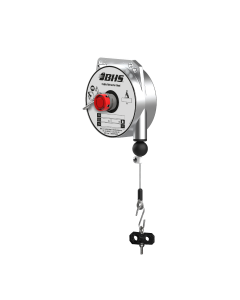
The solution is to invest in cable management systems for every charger in your fleet. Our suggestion? A combination of Cable Retractor Reels and Cable Retractor Reel Mounts.
Together, these products create a system by which you can design and create cable management systems that are perfect for any space. Cable Retractor Reel Mounts include articulating arms, which you can arrange to bring cables to any point of access. They can attach directly to charger stands, creating modular infrastructure that’s ready for any charging technology.
Cable Retractor Reels, meanwhile, automatically lift cables out of the way between uses. Stainless steel rope can handle the heaviest charging cables, while extension lengths of up to 78 inches provide plenty of leeway to fit into any space.
Explore Cable Management solutions from Solus Group.
3. Locate charging stations strategically.
You’re more likely to use an “opportunity charge” model with AGVs and AMRs, simply because the charging intervals are shorter than traditional forklift batteries. Here’s what forklift users have learned about opportunity charging, however: It only gets done when operators remember to do it!
In other words, if you place chargers far from where operators are when they go on break, you’ll see more missed charging intervals. That’s why it’s best to locate fleet charging equipment near break rooms, loading docks, or other places the equipment will naturally sit idle.
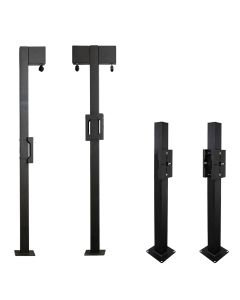
Of course, these areas may also be places where space is at a premium. That’s why it’s essential to build charging stations that occupy a compact footprint. Try space-saving supports like Universal Forklift Charger Stands or EV Charter Pedestals.
Buy EV Charger Pedestals from Solus Group.
4. Charge multiple vehicles from each charging station.
The theme of compact, space-saving design has come up a few times in our list. Here’s another strategy for reaching this goal — an important one for warehouses, in which space and profitability go hand in hand.
Arrange charging stations so that multiple vehicles can park and plug in at once. That may require multiple parking spaces and a 360-degree angle of approach. But it will certainly require charger stands that support multiple units at once.
EV Charger Pedestals have space for two EV chargers. Universal Forklift Charger Stands go even further, offering the choice of two charger shelves or up to four wall-mount brackets.
Learn more about Universal Forklift Charger Stands from Solus Group.
5. Keep your charging stations flexible enough to work with emerging technologies.
If there’s one lesson we’ve learned from decades of engagement with forklift battery rooms, it’s that technology never stands still. Today, warehouse managers are reorganizing to accommodate AGVs and AMRs. Tomorrow, you could host a fleet of drones, bipedal robots, or as-yet unimagined systems.
Rapid technological change shouldn’t require you to rebuild charging stations from scratch. You’ll save huge sums by investing in flexible charging station infrastructure today. Look for modular systems that allow you to add, subtract, and move shelves, or replace them with wall-mount brackets. Choose cable management systems with modular cable paths that you can adjust as you need.
In other words, invest in a combination of Universal Forklift Charger Stands, Cable Retractor Reel Mounts, and Cable Retractor Reels. Together, these products offer a fully modular system for building charging stations that work for all kinds of electric industrial vehicles.
That includes the AGVs and AMRs of today. It also includes electric lift trucks, whether they run on li-ion or lead-acid technologies. And it provides future-proofing for whatever technology comes next.
You may not build a traditional battery room to charge your industrial fleets — but the lessons we’ve learned from decades of electric forklift charges hold true no matter where material handling technology takes us.
Need help building modular charging stations? The material handling experts at Solus Group can walk you through the options. Call us at 314-696-0200 to get started.
Related Products