We use cookies to make your experience better. To comply with the new e-Privacy directive, we need to ask for your consent to set the cookies. Learn more.

How to Design a Compliant and Efficient Battery Charging Station
December 2, 2025
|
Categories: Blog
Part of the maintenance required to sustain a forklift battery’s quality of life, aside from routine washing and safety inspections, involves repetitive charging. A standard forklift battery charging station is a power supply designed to recharge large industrial batteries within a warehouse in accordance to OSHA standards.
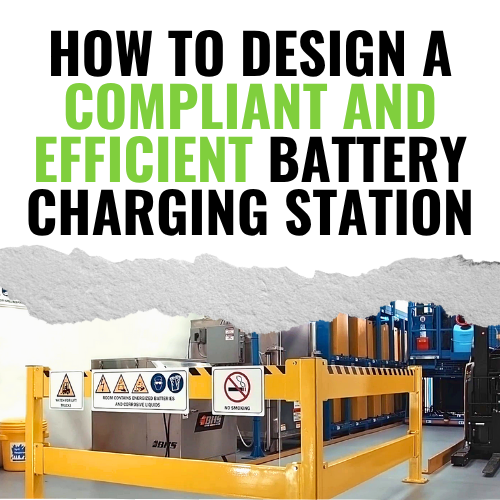
OSHA requires battery charging stations to have a designated area, adequate ventilation to prevent hydrogen gas accumulation, and an assortment of PPE equipment. Below is a comprehensive checklist to ensure that your facilities are up to OSHA standards.
Designated Area & Protection:
- Designated Space – Battery charging installations must have their own designated areas, not improvised or installed in haphazard locations.
- Charger Protection – The charging apparatus must be protected from damage from passing industrial trucks and electric vehicles (EVs).
- Acid-Resistant Materials – Battery racks and floors must be acid-resistant and able to withstand any potential electrolyte spills.
Ventilation & Fire Safety:
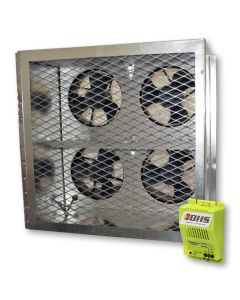
- Proper Ventilation Systems – Adequate ventilation is crucial to diffuse hydrogen gas generated during charging to mitigate the accumulation of explosive mixtures. Install a Hydrogen Exhaust Fan Kit to monitor hydrogen levels, activate operating alarms and ventilation fans when necessary to exhaust these gases.
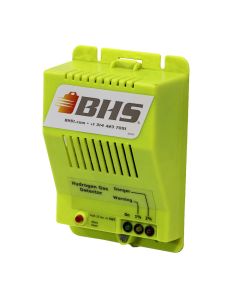
- Hydrogen Gas Detectors – Battery rooms should also have a functioning hydrogen gas detector to monitor gas density.
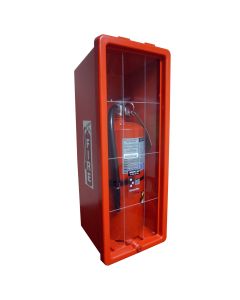
- Fire Extinguishers & Smoke Detectors – Fire Extinguishers and smoke detectors are required in battery rooms as a safety measure against fires or explosions.
Personal Protective Equipment (PPE):
Stocked PPE Kits are required in most facilities and warehouses for the safety of the workers in the event of acid spills and similar accidents. Some standard PPE include, but are not limited to,
- Gloves & Aprons – Workers must wear acid-proof gloves (rubber or neoprene) and acid-resistant clothing when handling hazardous materials.
- Eye Protection – Safety glasses with side shields or full-face shields are especially important for workers wearing contact lenses, which can trap acid against the eye.
- Footwear – Acid-resistant shoes or boots should be worn through the battery room.
Emergency Equipment:
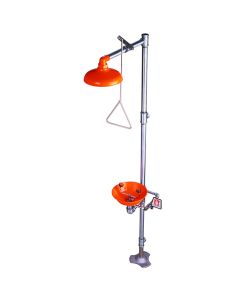
- Eyewash Stations/Showers – Emergency eyewash stations or showers must be located within 25 feet of areas where batteries are regularly handled.
- Spill Kits: Employers must provide battery spill kits or other means to contain and neutralize spilled electrolyte.
Making sure that workers are appropriately trained on battery charging procedures and the use of safety equipment is a general safety practice that should be adhered to by every workplace.
As for the charging station itself, selecting an appropriate stand for forklift chargers is easy. The Universal Forklift Charger Stand (CSU) supports chargers of all sizes and types. The modular design of the CSU allows you to configure the stand to your current application needs, and adjust to future needs. This compact solution can accommodate wall-mount chargers or self-mount chargers, and even integrates your choice of cable management.
To learn more about charger stands and the OSHA required equipment needed for your facility, call the experts of Solus Group at 314-696-0200.
Related Products