We use cookies to make your experience better. To comply with the new e-Privacy directive, we need to ask for your consent to set the cookies. Learn more.
How to Use an Eyewash Station at Work
September 9, 2025
|
Categories: Blog
If you work with corrosive chemicals — or if your employees work with those chemicals — you need to understand how to use an eyewash station before an emergency occurs.
Why? For starters, you won’t have time to look up the instructions: The first 10-15 seconds after exposure to a hazardous product are critical.
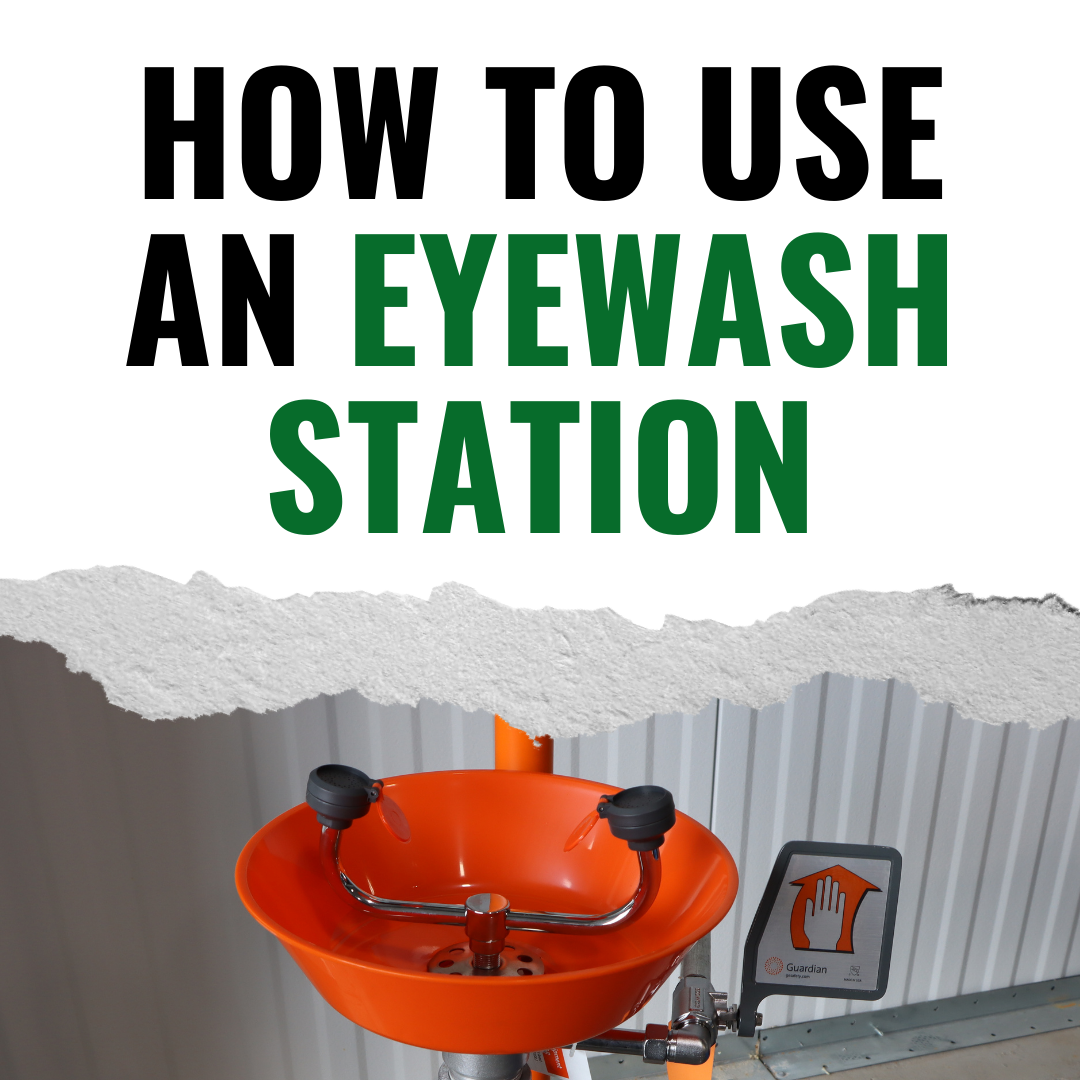
Of course, the Occupational Safety and Health Administration (OSHA) also requires that employers provide eyewash stations and train their employees to use them, per 29 CFR 1910.151(c). We’ve written quite a bit about that regulation, and for good reason; it’s a key standard for battery rooms and other environments where corrosive chemicals are present.
While eyewash stations aren’t especially complicated, they’re vital equipment. Here’s how to use them safely (along with a few tips for outfitting).
How to Use an Eyewash Station in an Emergency: Step-By-Step
Remember, when you’re dealing with corrosive chemicals (including battery acid), every second counts. Make sure all employees understand each of the following steps:
- Go to the Eyewash Station Immediately. The instant a chemical splash occurs, do not hesitate. Do not attempt to finish a task, wipe your eyes, or assess the damage. Your only priority is to move directly to the nearest eyewash station. As you move, shout for help to alert coworkers to the emergency. If you wear contact lenses, remove them as quickly as possible, as they can trap chemicals against the surface of the eye and prevent the flushing fluid from reaching the cornea.
- Activate the Station. Activate the unit by pushing the paddle, pulling the lever, or stepping on the pedal in a single, firm motion. The water must begin flowing in one second or less. Do not worry about the water spilling onto the floor — a wet floor is a minor, manageable issue compared to the irreversible damage a chemical can do to your eyes.
- Position Your Eyes in the Stream. Lower your face so that your eyes are in the direct path of the two streams of flushing fluid. If possible, orient your head so the water flows from the inner corner of your eyes (near the nose) towards the outer corner. This helps to flush the contaminant away from the tear ducts and prevents cross-contamination of the uninjured or less-injured eye.
- Forcibly Hold Your Eyelids Open. This is the most critical (and often the most difficult) step. The body's natural reflex is to squeeze the eyes shut in response to pain or foreign material. However, the flushing fluid must make direct contact with the surface of the eyeballs, not just the outside of your eyelids.
- Roll Your Eyeballs. While keeping your eyelids open, you must ensure the water reaches every part of the eye. To do this, continuously and gently roll your eyes up, down, left, and right. Movement helps wash contaminants from under the eyelids and across the entire cornea and sclera.
- Continue Flushing for the Full 15 Minutes. The 15-minute flush duration is the minimum time required by the ANSI standard and is based on medical evidence for effective decontamination. This will likely be uncomfortable, especially if the water is at the colder end of the tepid range, but it is absolutely essential. For some particularly aggressive chemicals, the Safety Data Sheet (SDS) may recommend a longer flushing time (e.g., 30 or even 60 minutes).
After flushing the liquid, seek immediate medical attention. This is not optional. Call 911 or have a coworker drive the victim to the nearest emergency room. Some chemical injuries can have delayed effects, and only a medical professional can properly assess the damage and prescribe further treatment. If possible, bring the SDS for the specific chemical to the hospital.
Finally, report the Incident. Every workplace injury must be reported to a supervisor according to company policy and OSH reporting requirements.
OSHA Eyewash Station Outfitting: Staying Compliant
Eyewash stations must comply with ANSI/ISEA Z358.1: American National Standard for Emergency Eyewash and Shower Equipment. While ANSI isn’t an official requirement for OSHA compliance, it’s the de facto requirement — look for stations that explicitly mention ANSI conformance or compliance in their product literature.
Additionally, eyewash stations must have wash fluid that is “tepid,” with a temperature between 60 and 100 degrees Fahrenheit (16 to 38 degrees Celsius). To learn more, read: OSHA Eye Wash Station Requirements: 7 Frequently Asked Questions.
Products to Consider
Solus Group provides a range of ANSI-compliant solutions to help employers meet their obligations under OSHA (and provide a safer work environment for battery room personnel and other workers).
Wall Mounted Eye Wash Stations
These permanent, wall-mounted eye wash stations connect to facility plumbing, and are manufactured in compliance with all ANSI Z358.1 specifications. They include a self-regulating flow control valve to ensure ideal spray pressure. Other features include stay-open ball valves, filters, and float-off dust covers.
Buy Wall Mounted Eye Wash Stations from Solus Group
Shower Eye Wash Stations
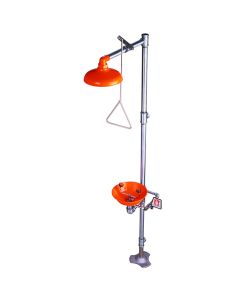
This plumbed, floor-mounted unit combines an OSHA-compliant safety shower with an appropriate-height eye wash station in a single system. Users can flush their eyes while simultaneously dousing the whole body with an overhead spigot. An optional curtain limits splashing and provides privacy during emergency body flushes.
Buy Shower Eye Wash Stations from Solus Group
Portable Eye Washes
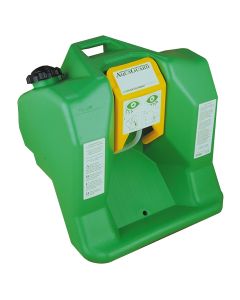
Portable Eye Wash (PEW-700) stations are self-contained, high-density plastic units that combine OSHA-compliant dual spray nozzles with a 16-gallon reservoir, surpassing minimum ANSI specifications for 15 minutes of flushing at a flow rate of 0.4 gallons per minute. Every PEW-700 ships with a bottle of bacteriostative additive that keeps the flushing solution safe for up to six months.
Buy Portable Eye Washes from Solus Group
Pedestal Mounted Eye Wash Stations
If you don’t have a wall within 55 feet of an exposure-risk area, install a Pedestal Mounted Eye Wash Station where appropriate. This is a permanent, plumbed installation, engineered for compliance with OSHA and ANSI.
Buy Pedestal Mounted Eye Wash Stations from Solus Group
For help finding the best option for your facility, contact Solus Group at 314-696-0200.
Related Products