We use cookies to make your experience better. To comply with the new e-Privacy directive, we need to ask for your consent to set the cookies. Learn more.

5 Common Electrical Code Violations to Avoid
October 3, 2023
|
Categories: Blog
The National Electrical Code (NEC), is a big book. The 2023 edition contained more than 900 pages of standards, definitions, and tables. It covers everything from approved equipment to wiring methods to niche installations like swimming pools and EV charging stations.
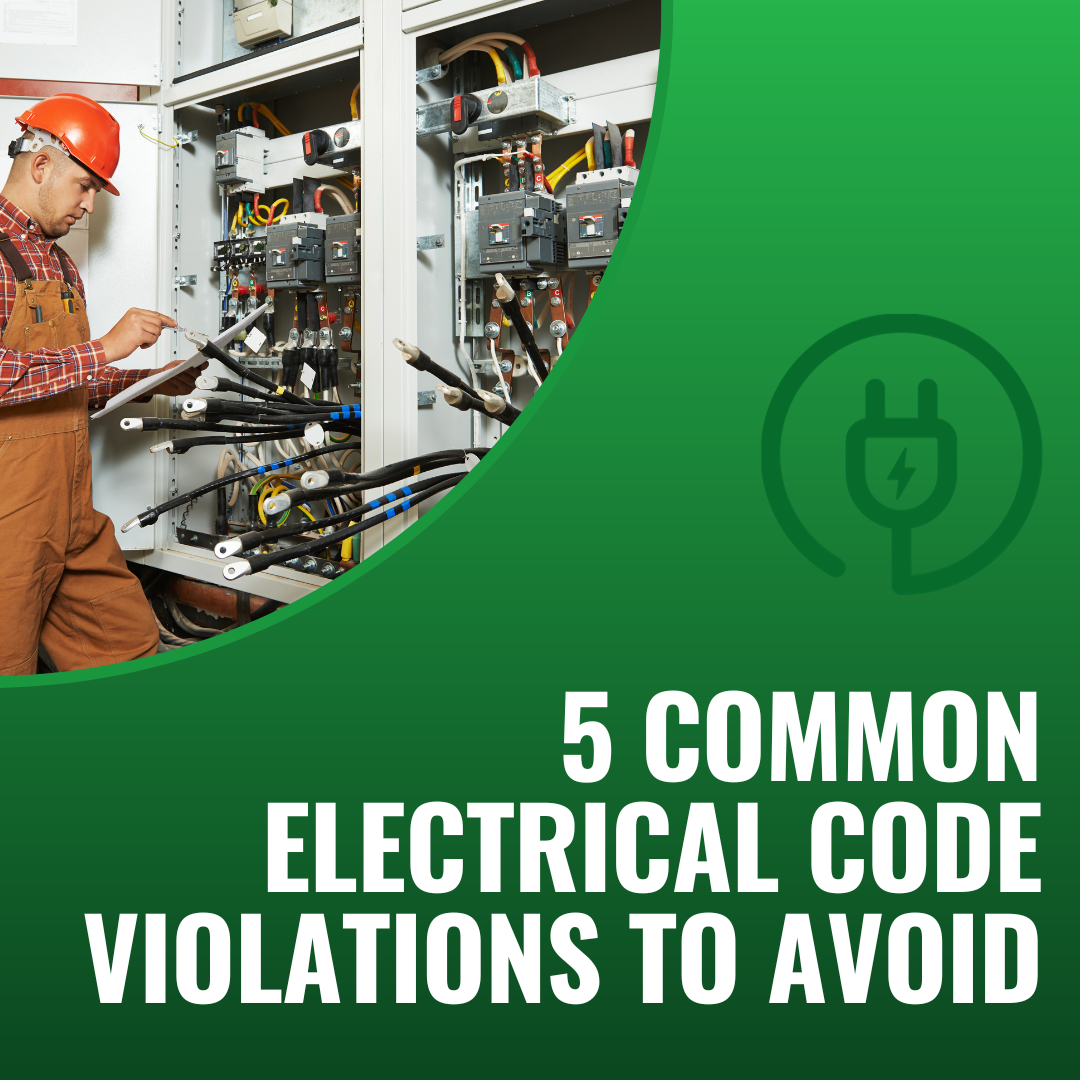
Given that local building codes in all 50 U.S. states enforce NEC standards, there’s a real cost to NEC compliance failures. But with so many codes to follow, it’s easy to let a violation slip through.
Which NEC rules do electricians tend to break? The National Fire Protection Association (NFPA), which publishes the NEC, doesn’t keep a public list of NEC failures. To get an idea of the most common electrical code violations, you’d have to ask the thousands of electrical inspectors scattered across local jurisdictions all over the nation.
Luckily, that’s just what trade publication Electrical Construction & Maintenance (EC&M) did in 2023. Here are five of the most common NEC violations EC&M found — along with the best way to address a safety concern that falls outside of the NEC’s rubric.
5 Electrical Code Violations Electricians May Overlook
Electrical inspectors across the U.S. reported the top electrical code violations to EC&M. Here are some of the mistakes they see again and again:
- Overstuffing electrical conductor boxes. According to NEC code 314.16, electricians must calculate the maximum volume of conductors they can safely fit into boxes. Table 314.16(A) covers the fill volume and total number of conductors, based on size, that you can put into a box. However, many electricians don’t appear to consult this table; inspectors said crowded conductor boxes are a common NEC violation.
- Failing to properly label circuits on panelboards. When you wire a new electrical panel, don’t forget to fill out the directory — and do so in a way that non-electricians can easily understand. Many electricians use trade symbols on panelboard directories; occupants won’t understand these. Describe circuits by the rooms they feed. Follow the rules listed in NEC code 408.4 to avoid this common violation.
- Installing hard-to-reach GFCIs. NEC code 210.8 requires ground fault circuit interrupters (GFCIs) to be placed in a “readily accessible location.” If a GFCI is stuck behind a heavy appliance, after all, users won’t be able to reset the GFCI receptacles when they trip. To avoid setting the stage for this NEC violation, consider the equipment that will be powered by a GFCI receptacle, and install the unit where later technicians can reach it easily.
- Enclosing electrical systems prior to official inspection. State and local jurisdictions almost certainly require inspections of all electrical installations. Unfortunately, inspectors report many electricians closing up walls or filling in trenches before they have a chance to inspect the work. That’s very likely a violation of the local building code, and can cost contractors a lot of time and money. You may have to uncover the installation for inspectors, repeating the same job twice.
- Placing electrical equipment in tight spaces. The NEC provides special rules for the space surrounding electrical equipment that operates at 1,000 volts, nominal, or less to ground. If this equipment is likely to require maintenance, adjustment, or even inspection while energized, it probably requires at least 30 inches (762 millimeters) of clear space around it. See NEC code 110.26 for details.
Any of these electrical code violations can lead to serious costs, both financial and otherwise. At any rate, these codes and the rest of the rules found in the NEC are designed to keep electrical installations safe — both for the people who use them and the electricians who service them.
However, following the NEC isn’t enough to improve safety for electricians. You must also take steps to prevent the development of musculoskeletal disorders, injuries that come from moving the body in unhealthy ways.
Preventing Ergonomic Injuries for Electricians
Applied ergonomics is the practice of matching work to the worker, preventing the kinds of dangerous, repetitive movements that can damage bones, muscles, and connective tissue. The Occupational Safety and Health Administration (OSHA) recommends three types of solutions to improve ergonomics: engineering controls, administrative controls, and personal protective equipment.
Engineering controls are most effective, says OSHA, and these include the use of material handling equipment to prevent bodily stress. Solus Group offers a complete line of specialized material handling equipment designed to improve both safety and productivity for electricians.
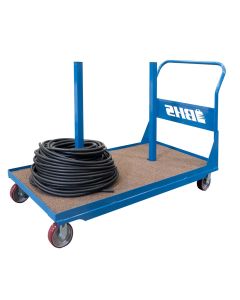
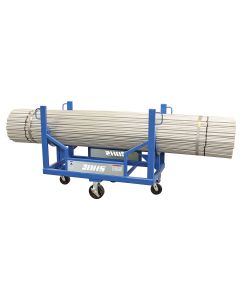
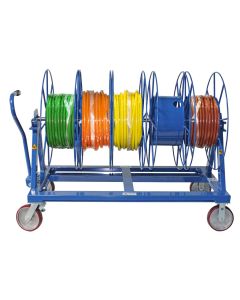
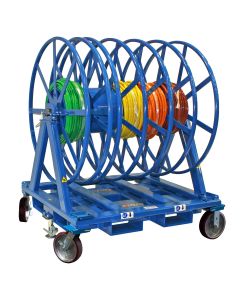
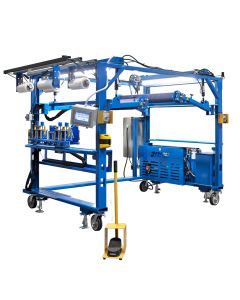
Wire & Cable Handling Equipment provides solutions for storing and transporting cable and wire reels. Electrical Material Carts prevent risky lifting and carrying, while also leading to much shorter timelines at the jobsite. And Utility Equipment provides more manageable access to utility trenches and other electrical workspaces.
As you plan to prevent electrical code violations, take a moment to consider safety as a whole. Explore Solus Group’s selection of Electrical Material Handling Equipment for safer, more productive electrical installations every time.
Questions? Contact Solus Group at 314-696-0200 today.
Related Products
Spool Winding Trolley PLUS
For pricing or more information, contact us by calling 314-696-0200
In stock