We use cookies to make your experience better. To comply with the new e-Privacy directive, we need to ask for your consent to set the cookies. Learn more.

How Do You Dispose of Battery Acid From a Workplace Spill
December 16, 2025
|
Categories: Blog
In industrial environments powered by electric forklifts, battery acid spills are virtually unavoidable. You can certainly limit the chances of an incident with proper precautions — but lead-acid batteries contain corrosive sulfuric acid, and eventually, a boilover or spill will occur.
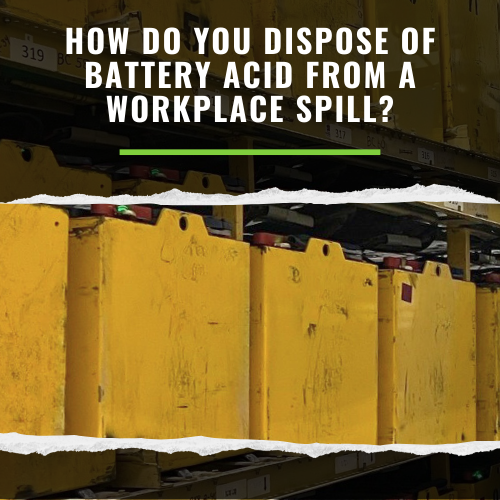
When that happens, facility managers must act quickly to protect personnel and infrastructure. However, cleaning up the mess is only half the battle; you must also know how to legally and safely dispose of the hazardous material.
The process of disposing of battery acid isn't as simple as soaking it up and throwing it in the dumpster. Under federal and state regulations, battery acid is hazardous waste until it is properly neutralized. Failing to follow the correct protocols can lead to severe fines and environmental contamination (not to mention damage to equipment and infrastructure).
Here’s everything you need to know about how to dispose of battery acid from a workplace spill.
Step 1: Assess the Risk and Don PPE
Before attempting to dispose of battery acid, you must determine if the spill is incidental or an emergency.
According to OSHA, an incidental spill is one that does not pose a significant safety or health hazard to employees in the immediate vicinity and can be safely handled by workers. If the spill poses an immediate threat or is uncontrolled, it requires a specialized hazardous response (or a Hazardous Waste Operations and Emergency Response, HAZWOPER for short).
Regardless of the size of the spill, workers must wear appropriate Personal Protective Equipment (PPE) provided by the employer. Battery acid is extremely hazardous, and direct contact can cause blindness and burns.
To ensure compliance, equip your team according to OSHA regulation 1910.178(g).
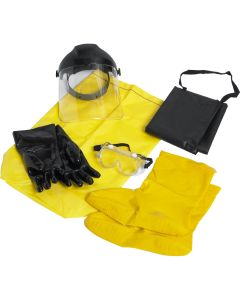
- Look for: A complete PPE kit that includes chemical splash goggles, a face shield, an acid-resistant apron, and neoprene gloves.
- Reference: Consult the battery’s Safety Data Sheet (SDS) to determine the specific PPE requirements for the electrolyte.
Your team should understand how to properly don PPE, and they should have immediate access to the equipment they need for an adequate spill response. That means that you should have a plan in place for replenishing PPE as it is used.
To learn more about PPE for spill response, read: The ROI of Effective Spill Containment.
Step 2: Contain and Neutralize the Acid
You cannot dispose of raw sulfuric acid in standard trash receptacles or rinse it down the drain. The acid must be neutralized.
While some facilities rely on baking soda, this method involves guesswork and can be messy to clean up. Neutralizing agents are an excellent investment — we recommend dedicated products like AcidSafe, which take the guesswork out of spill response.
Your team should follow these steps:
- Contain the area: Use chemical-resistant sorbent socks or booms to create a dike around the perimeter of the spill, preventing the liquid from spreading to drains or walkways.
- Apply neutralizer: Pour an acid-neutralizing sorbent such as AcidSafe over the spill.
- Verify safety: Look for products with color-change indicators. AcidSafe changes color to visually indicate when the pH level has reached a safe state, confirming that the corrosive acid is neutralized.
- Protect workers from injury: Ensure access to an OSHA-compliant eye wash station in case of accidental exposure during the neutralization process.
Step 3: Bag and Dispose According to Regulations
So, after you’ve neutralized the spill, how do you dispose of the battery acid?
The used absorbent materials generally take on the hazardous properties of the liquid they absorbed. Even if neutralized, the waste must be handled with care — don’t pour it into sinks or storm drains, and don’t dispose of it in a regular trash bin!
- Bag the waste: Place all saturated sorbents, used pads, and contaminated debris into heavy-duty, chemical-resistant disposal bags.
- Label correctly: Clearly label the bags containing the waste.
- Follow local rules: Always consult local, state, and federal authorities regarding final disposal.
Even if battery acid is neutralized to a safe pH (removing the corrosivity hazard), the spill residue often contains dissolved lead and other heavy metals leached from the battery cells. That means that it’s toxic hazardous waste under EPA guidelines, regardless of its pH. Your waste management partner can provide some guidance here.
For maximum compliance, use spill kits packaged in UN/DOT-compliant drums or pails, which can be used for the secure transport of waste.
Battery Acid Spill Response Products from Solus Group
To handle battery acid disposal safely, facilities need access to purpose-built response tools. Solus Group offers comprehensive solutions designed to meet these specific challenges.
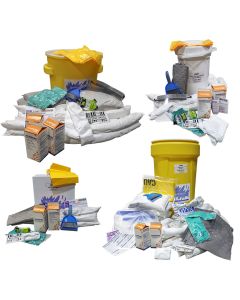
Battery Acid Spill Kit (SK)
Battery Acid Spill Kits (SK) from WYK Sorbents are compact, fast-acting, and highly visible, which makes them essential for any facility with battery charging stations. It contains neutralizing sorbents and PPE for a complete response.
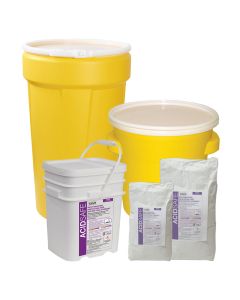
AcidSafe Neutralizing Sorbent (AN)
Designed specifically for corrosive spills, AcidSafe neutralizes battery acid while providing a visual color-change indicator to confirm safety. It eliminates the guesswork associated with baking soda — and works quickly to remove hazards from your worksite.
Personal Protective Kit (PK-1200)
This kit ensures your team is protected against chemical hazards during disposal. It includes an acid-resistant apron, face shield, goggles, HAZ-MAT boots, and neoprene gloves.
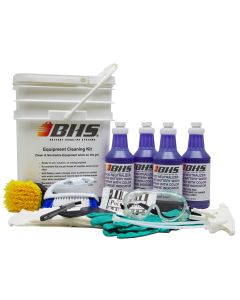
Battery Cleaning Kits and Drip Pan Sorbents
Stocking up on consumables helps your facility respond quickly to major spills and keep minor drips & leaks under control. Solus Group carries a variety of products, including AcidSafe Socks (AN600) for battery drip pans and Equipment Cleaning Kits (ECK-4) for maintaining battery handling equipment.
Ready to outfit your operation for safety compliance?
Ensuring you have the right equipment to neutralize and dispose of battery acid protects your workers and your bottom line. Contact the Solus Group sales team at 314-696-0200 or send us a message online to discuss your facility's specific spill response needs.
Related Products