We use cookies to make your experience better. To comply with the new e-Privacy directive, we need to ask for your consent to set the cookies. Learn more.

Optimizing Textile Recycling with Material Handling Equipment
September 4, 2025
|
Categories: Blog
The fashion industry is the second largest polluter in the world, competing only with the oil industry, but the effort to responsibly source and recycle textile waste is on the rise. According to the Environmental Protection Agency (EPA) , 16.9 million tons of textiles were produced in 2017 with only 13.6% estimated to have been recycled, filling landfills with more than 10 million tons of textile waste each year.
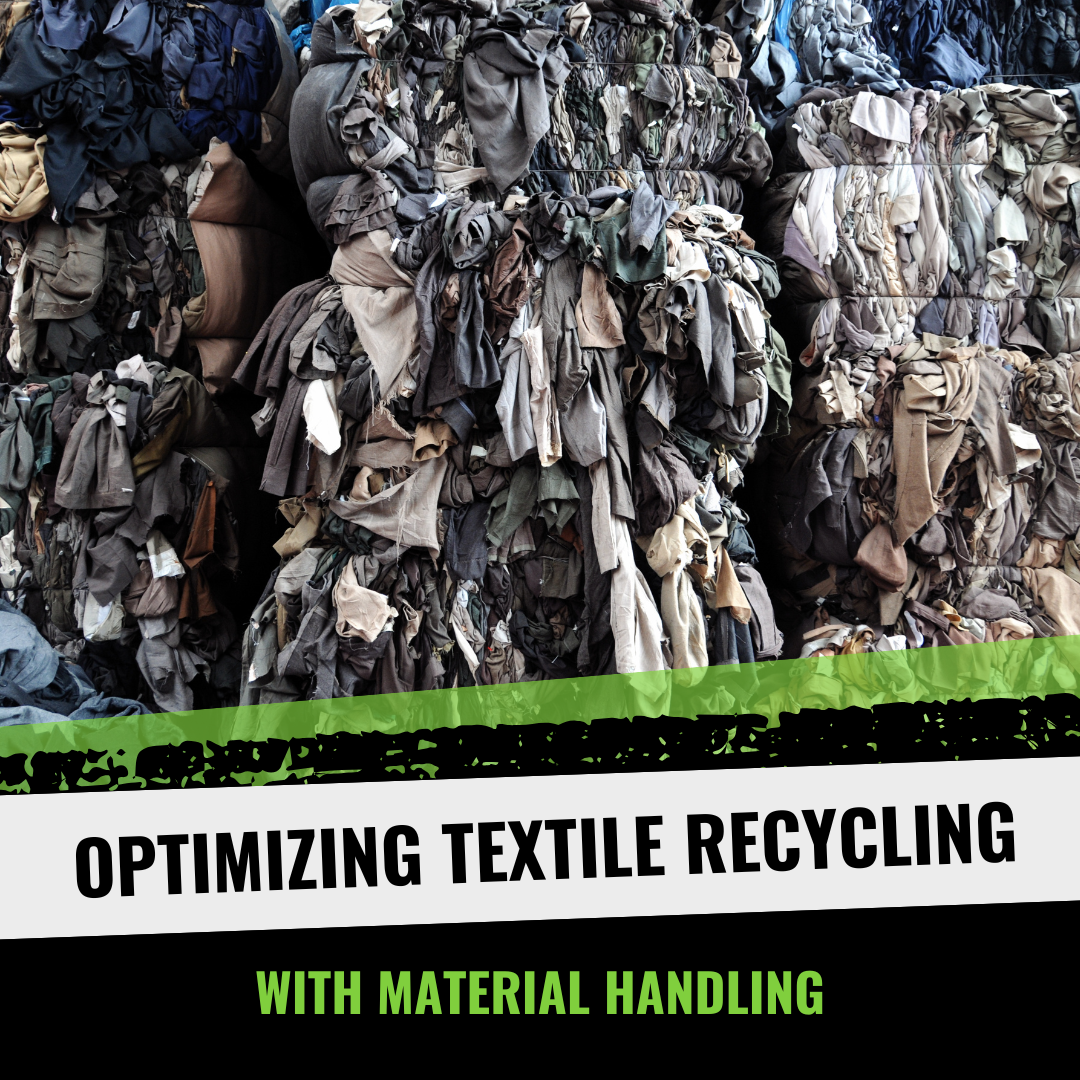
Recently, the textile recycling market has experienced significant growth with the development of new recycling technologies and methods, including fiber-to-fiber (F2F), componentry-to-componentry (C2C), and open-loop recycling (downcycling and upcycling).
Companies globally are working to mitigate these dangerous textile wastes through processes called textile recycling.
What is Textile Recycling?
The EPA reported that in 2018 alone, 17 million tons of textile municipal solid waste (MSW) was generated. Textile recycling is the process of repurposing all of that discarded material (such as fiber, yarn, and fabric) to create new products and extend existing product life.
Academic studies from the International Labor Organization show that textile reuse and recycling are more advantageous than incineration and landfilling. So, what is the first step in the process?
Used clothes and other textile wastes end up at recycling centers where they’re separated based on their synthetic makeup. Natural fibers are cleaned and spun into yarn while artificial fibers are shredded. The processed fibers are then used to create new fabrics, stuffing, or other products.
What are the Different Types of Textile Recycling?
There are three main techniques used when recycling textile waste.
Mechanical Recycling:
Mechanical Recycling is the physical process of shredding, sorting, and repurposing fibers into new materials without altering their chemical structure. Natural fibers (such as cotton) are spun into yarn while synthetic fibers are shredded and used for padding.
While versatile and able to handle a variety of blended textiles, mechanical recycling has certain limitations when it comes to processing post-consumer textiles.
Advantages of Mechanical Recycling
- Preserves the integrity of textiles by avoiding break down into molecular components, enabling transformation of fibers.
- Versatile application; can handle a wide variety of textile waste including cotton, wool, polyester and even blended fabrics.
- This mature technology can be easily implemented within textile production facilities.
Disadvantages of Mechanical Recycling
- Can struggle to process post-consumer textile waste, which tends to be more difficult to separate and sort.
Chemical Recycling:
Chemical Recycling breaks down fibers at a molecular level into their most basic components to allow for the creation of new materials. This technique involves dissolving fibers into solvents to be able to extract certain dyes or additives and creating new components from those materials.
Advantages of Chemical Recycling
- Reduces textile waste by creating valuable raw materials and producing a more versatile range of products.
- Promotes a more sustainable and circular fashion industry, offering multiple points of re-entry into the fashion supply chain.
Disadvantages of Chemical Recycling
- Textile waste containing blends of fibers and dyes can complicate the chemical recycling process.
Thermal Recycling:
Thermal Recycling, also known as thermomechanical recycling, uses intense heat to melt down and transform textile waste into masses that can be used to make new fibers. This technique is more energy efficient than Mechanical Recycling and Chemical Recycling but comes with limitations, such as the inability to separate and remove colors.
How Material Handling Equipment Can Improve Textile Recycling
With millions of tons of textile municipal solid waste being generated every year, recycling centers and processing facilities are overrun with the sheer volume of material left to sift through. This overwhelming supply can create hazardous environments for workers who have to maneuver and handle these materials.
Aside from outfitting employees with the Proper Protective Equipment (PPE), affording facilities with ergonomic tools built to boost productivity helps eliminate these potential hazards.
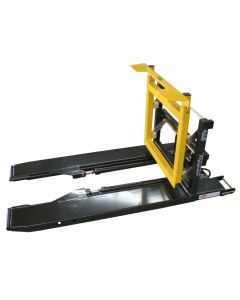
- Forward Bin Tippers, a forklift attachment, can be utilized to transport and dump sorted materials to minimize the amount of manual labor.
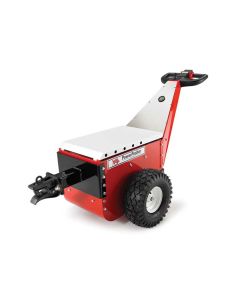
- Nu-Star’s PowerPusher increases productivity by allowing a single person to safely maneuver multiple bins at once without the risk of muscle strain.
- Bin Dumpers are designed to efficiently unload various kinds of recycling containers.
To optimize your operations, contact our material handling experts at Solus Group by calling 314-696-0200
Related Products
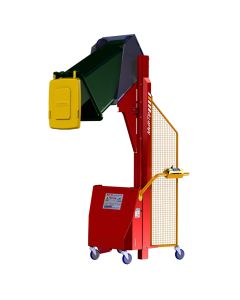
Multi-Tip® Hydraulic Bin Dumper
For pricing, contact us by calling 314-696-0200 or Request a Quote.
In stock
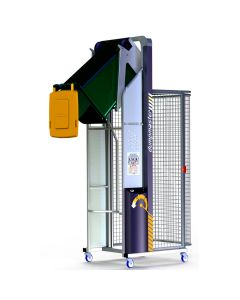
Dumpmaster® Hydraulic Bin Dumper
For pricing, contact us by calling 314-696-0200 or Request a Quote.
In stock