We use cookies to make your experience better. To comply with the new e-Privacy directive, we need to ask for your consent to set the cookies. Learn more.

How To Use a Commercial Trash Compactor Safely
November 18, 2025
|
Categories: Blog
Heavy machinery deserves respect — and that’s especially important when the equipment in question is designed for waste disposal.
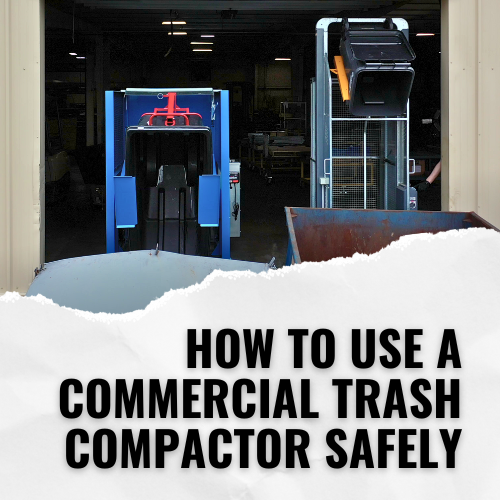
Industrial trash compactors can produce over 50,000 pounds of ram force. Unfortunately, that type of power creates serious workplace risks: OSHA accident reports include hundreds of incidents involving commercial trash compactors, including dozens of incidents with fatalities.
Appropriate safety controls can greatly limit these hazards. In this article, we’ll discuss how to use a trash compactor safely (and how the right MHE can help).
Note: This isn’t intended as a comprehensive guide for trash compactor operation; make sure you read your equipment’s documentation thoroughly.
1. Load Trash Compactors with Appropriate Material Handling Equipment (MHE)
Many compactor-related incidents don't involve the compactor's ram at all. OSHA reports frequently cite accidents involving forklifts used to dump materials into compactors.
A lift truck may seem like a capable tool, but it’s simply not designed for the task. Poor visibility and overbalancing can lead to accidents. Manual lifting is no better — it places workers directly in the hazard zone and creates enormous ergonomic risks.
The safest and most efficient solution is to use MHE specifically engineered for the task. Bin Dumpers provide a controlled, automated tipping motion that keeps workers at a safe distance from the compactor chute.
Products to Consider
Dockmaster Hydraulic Bin Dumper (DM0700)
Specifically designed for facilities where compactors are located below a loading dock, the Dockmaster lifts bins and roll-out carts and safely tips their contents over the dock edge. It features a maximum weight capacity of 550 lb (250 kg), along with safety bars, rear-loading doors, and other features to keep workers safely away from dock ledges.
MegaDumper® Hydraulic Bin Dumper (MD)
For the heaviest industrial waste streams, the MegaDumper provides a powerful and reliable solution. It can lift and empty fully loaded bins weighing up to 1,323 lb (600 kg), making it an ideal choice for high-volume manufacturing, processing, and distribution centers that generate significant amounts of waste.
Multi-Tip® Hydraulic Bin Dumper (MT)
For maximum versatility, the Multi-Tip Hydraulic Bin Dumper handles a wide variety of industrial bins ranging from 24 gallons to 96 gallons. An onboard sealed battery provides portability, and electro-hydraulic operation can accommodate duty cycles of 5,500 lb (2500 kg) of material per charge (or 2,000 lb per hour on continuous charge).
Review Solus Group’s full lineup of Simpro Bin Dumpers.
2. Follow OSHA Guidelines to Prevent Crushing Injuries
The crushing force of a commercial compactor makes it one of the most dangerous pieces of equipment on any jobsite. All personnel working with or near the equipment must be trained on proper operating protocols to prevent catastrophic injuries.
Follow these fundamental safety practices:
- Implement Lockout/Tagout (LOTO) Procedures. Before any maintenance, cleaning, or attempts to clear a jam, the compactor must be completely de-energized and locked out. There are no exceptions to this rule. This practice is mandated by OSHA's standard on the Control of Hazardous Energy (Lockout/Tagout), 29 CFR 1910.147.
- Ensure Machine Guarding is Intact. All safety guards, access gates, and emergency stop buttons must be in place and fully functional. Never bypass safety interlocks for any reason. Per OSHA's General Requirements for All Machines, 29 CFR 1910.212, machine guarding must be provided to protect operators and other employees from hazards.
- Restrict Access. Only trained and authorized employees should be allowed to operate a commercial trash compactor. Per OSHA's training standards, outlined under the guidelines for operating powered industrial trucks, only properly trained personnel should use heavy machinery. Keep the area clear during operation.
- Never Reach Into the Chamber. Under no circumstances should a worker reach into the compaction chamber while the machine is powered on. This is a critical aspect of both machine guarding and LOTO procedures. Use appropriate tools to clear obstructions after performing a full LOTO procedure.
Encourage a culture of proactive safety. Keep the area around the compactor clean and free of debris to prevent slips and falls. You should also make sure that all operators wear appropriate Personal Protective Equipment (PPE) and report any unusual noises or malfunctions to a supervisor. Never operate equipment that appears to be damaged or is not working correctly.
3. Don’t Forget About Ergonomics
Severe accidents are certainly a concern, but the most common workplace injuries are ergonomic. According to the U.S. Bureau of Labor Statistics, MSD cases in the private sector resulted in 272,780 cases involving days away from work (DAFW) in 2018 alone. That’s about 30 percent of the total number DAFW cases in the entire U.S. private sector.
Ergonomic equipment fits the job to the worker. Key principles to keep in mind:
- Identify High-Risk Tasks: Pinpoint any process that requires workers to manually lift, push, or twist while handling heavy trash bins.
- Implement Engineered Solutions: Eliminate hazardous manual tasks with appropriate equipment.
- Evaluate the Entire Workflow: Assess all components of the job, from the height of control panels to the design of the loading chute, to ensure they don't create unnecessary strain.
Bin Dumpers are an excellent example of an engineering solution, since they automate the tipping process entirely and protect workers from cumulative strain. With that said, you should also ensure that the compactor operation — however simple — is ergonomic in nature.
Related: Waste Management Ergonomics for Commercial Buildings
Build Safe, Efficient Waste Management with Solus Group
Creating a truly safe waste management process requires a holistic approach. It begins with choosing the right MHE to eliminate dangerous manual handling, continues with rigorous enforcement of safety procedures and an organizational commitment to safety.
By replacing high-risk tasks with engineered solutions, you protect your employees while streamlining your entire waste-handling stream. Solus Group offers custom material handling solutions to help your operation reduce costs, improve efficiency, and build a safer workplace from the ground up.
If you’re ready to outfit your operation with a secure waste management solution, we’re here to help. Call 314-696-0200 to explore custom options or send us a message.
Related Products
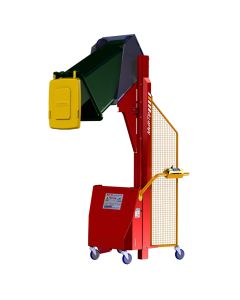
Multi-Tip® Hydraulic Bin Dumper
For pricing, contact us by calling 314-696-0200 or Request a Quote.
In stock
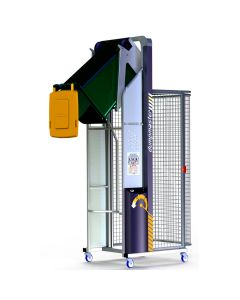
Dumpmaster® Hydraulic Bin Dumper
For pricing, contact us by calling 314-696-0200 or Request a Quote.
In stock
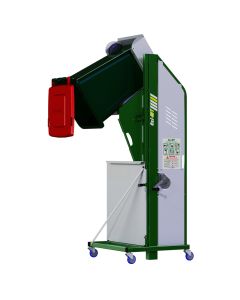
Ezi-MT® Manual Bin Dumper
For pricing, contact us by calling 314-696-0200 or Request a Quote.
In stock
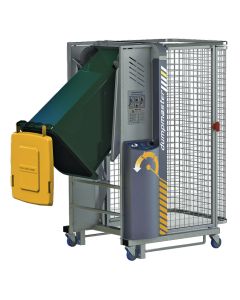
Dockmaster Hydraulic Bin Dumper, 27.5" tip height
For pricing, contact us by calling 314-696-0200 or Request a Quote.
In stock
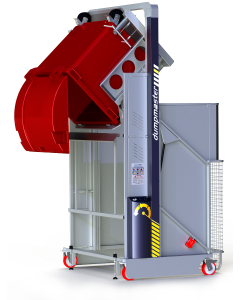
MegaDumper® Hydraulic Bin Dumper
For pricing, contact us by calling 314-696-0200 or Request a Quote.
In stock