We use cookies to make your experience better. To comply with the new e-Privacy directive, we need to ask for your consent to set the cookies. Learn more.
What Are Bin Dumpers For? A Q&A for Every Industry
July 22, 2025
|
Categories: Blog
Can a bin dumper help your organization become safer and more efficient?
The answer is a strong yes — regardless of the size of your business or your industry. In this article, we’ll answer some of the most common questions about bin dumpers (also called bin tippers, cart dumpers, bin lifters, box dumpers, or cart tippers).
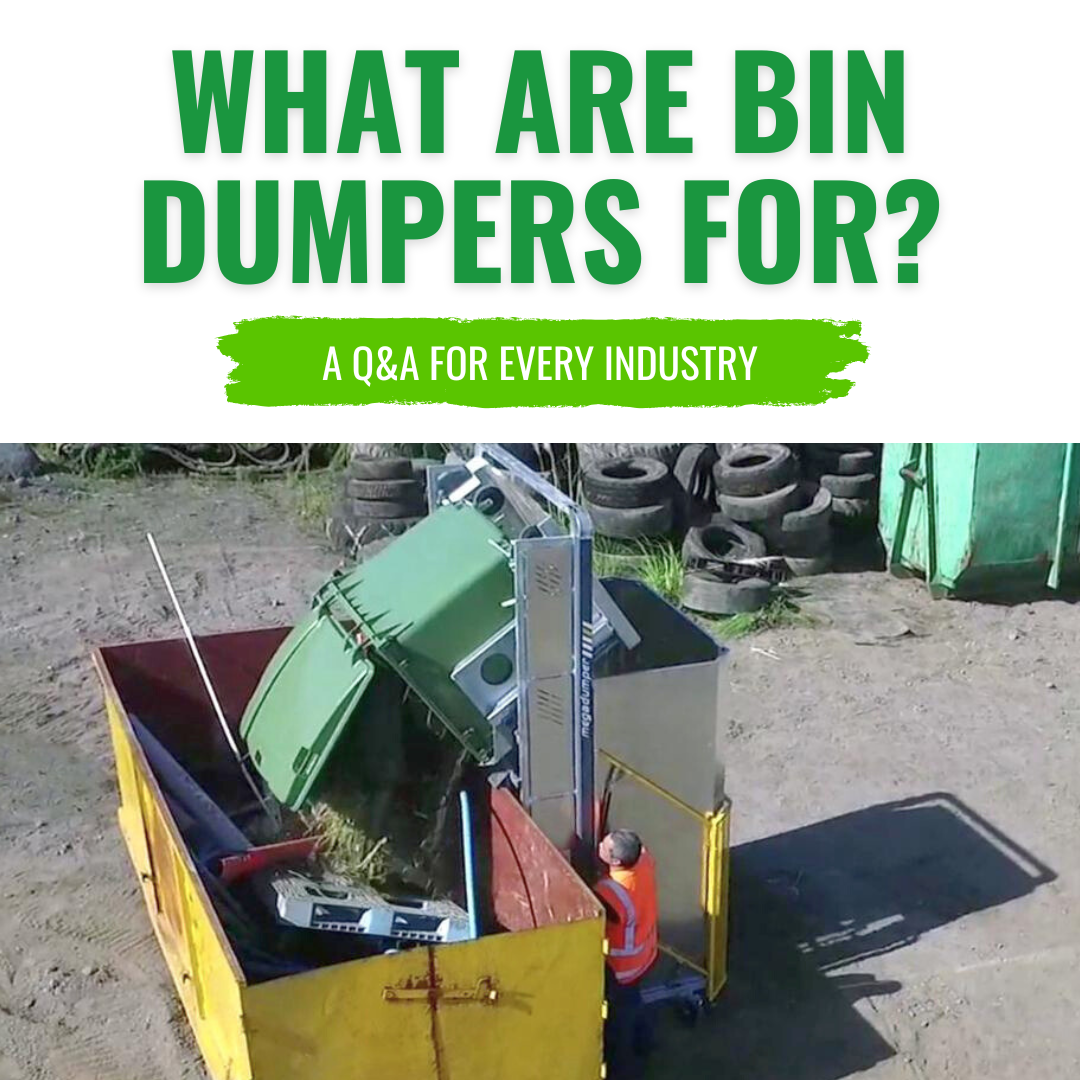
Bin Dumpers: Benefits, Applications, and Frequently Asked Questions
What is a bin dumper?
A bin dumper is specialized material handling equipment designed to safely lift and empty containers including bins, trash cans, and totes. Essentially, if you need to lift and tip a load for any reason, you should be handling the process mechanically — and that’s what bin tippers offer.
Today, a growing number of businesses are recognizing the importance of ergonomic material handling. Bin dumpers are commonly used in warehouses, schools, hospitals, food processing facilities, retail establishments, distribution centers, and numerous industrial settings.
How do bin dumpers actually improve efficiency?
Simply put, bin dumpers make material handling more consistent. That consistency translates to efficiency — and a significantly lower chance of musculoskeletal disorders (MSDs) caused by manually lifting, turning, and emptying bins.
In some use cases, bin dumpers can allow a single worker to handle a job that would otherwise require two or more people. They’re also ideal for minimizing fatigue in single-person applications (for example, emptying a large number of garbage bins in a school or retail establishment).
Are bin dumpers just for handling waste?
No — and this is one of the reasons that we prefer the term “bin dumper" to something like “garbage can dumper.” If you need to mechanize any lift-and-tilt action, there’s a bin dumper that can handle the job.
Some of the most common applications for bin dumpers include:
- Transferring raw ingredients into processing machinery.
- Moving components along a production line.
- Handling harvested produce.
- Sanitary transfer of pharmaceutical ingredients.
We’ll discuss these use cases in more detail later in this article. The point is that bin dumpers are an excellent example of flexible material handling equipment (MHE): They’re endlessly customizable and capable of performing in a variety of industrial and commercial environments.
Our staff lifts containers manually, and our productivity is fine. Do we really need bin dumpers?
You might assume that bin dumpers aren’t necessary if you’ve already established a manual practice. For example, you have a custodian who lifts and empties garbage cans into a cart, which he then takes to a dumpster — that’s already an efficient process, right?
But a single musculoskeletal injury can have serious repercussions for both employers and employees. Additionally, even the strongest workers will be fatigued after several hours of lifting — while a mechanical or hydraulic bin tipper will handle every lift with precision and speed.
How do bin dumpers improve workplace safety?
Bin dumpers significantly reduce the risk of musculoskeletal disorders (MSDs) by eliminating manual heavy lifting, awkward postures, bending, and twisting associated with lift-and-dump tasks. They can also help to prevent slip-and-fall injuries — generally, fewer fatigued workers means fewer spills — but the ergonomic case for bin dumpers is especially strong.
Consider the following:
- According to the Occupational Safety and Health Administration (OSHA), approximately 1.8 million workers suffer from MSDs annually.
- MSDs result in an estimated $20 billion in workers' compensation claims each year, per the U.S. Bureau of Labor Statistics.
- NIOSH has estimated overall costs associated with work-related MSDs range from $13 billion to $54 billion annually.
By automating hazardous manual tasks, bin dumpers align with ergonomic principles recommended by OSHA and NIOSH to prevent such injuries. For instance, OSHA's guidelines on material handling (including Standard 1910.176) emphasize safe practices, and tools like the NIOSH Lifting Equation help identify when mechanical assistance is necessary to reduce risk.
What are the main types of bin dumpers?
Bin dumpers vary by power source (manual, hydraulic, electric), mobility (mobile, stationary), construction material, and capacity (light to heavy-duty).
Manual units like the Ezi-MT Manual Bin Dumper are recommended for light-duty applications (for example, waste management in schools and churches), while hydraulic units are preferable for industrial and commercial use cases.
Nearly all bin dumpers from Solus Group can be modified and customized to meet specific needs. For example, stainless steel can be used to meet hygiene standards when handling food ingredients, and specific tip heights, angles, and capacities can be configured. That means bin dumpers can dump loads of virtually any capacity at virtually any height. To learn more about customization, send us a message.
Which industries commonly use bin dumpers?
In the United States, bin dumpers are gradually becoming standard equipment for a wide range of industries — and in Europe and Australia, they’re already well-established tools. Some common use cases include:
- Food Processing: Dumping bulk raw ingredients like fruits, vegetables, or grains into mixers, hoppers, or onto conveyor lines for further processing.
- Agriculture: Handling and transferring harvested produce from field bins onto cleaning or sorting equipment. Bin dumpers can also be used for moving bulk materials like animal feed or fertilizers.
- Manufacturing: Feeding raw materials or components from bins into production machinery or assembly lines. In some facilities, bin tippers are also used to manage the transfer of byproducts or scrap materials (like metal shavings or plastic fragments) for recycling or secondary processing.
- Pharmaceuticals: Sanitary transfer of pharmaceutical ingredients and compounds in controlled environments.
- Alcohol Production: Assisting in various stages of production, such as safely dumping grapes, mash, must, or other ingredients into vats for fermentation.
- Construction: Moving and emptying containers of materials like gravel, sand, cement, or construction debris at worksites.
- Chemical Processing: Safely handling and transferring various chemicals or hazardous materials from containers into processing units.
Are "bin dumper" and "bin tipper" the same thing?
Yes, the terms "bin dumper," "bin tipper," "cart dumper," and "bin lifter" are often used interchangeably. As we’ve discussed, the terms “garbage can dumper" and “garbage can tilter" are also used, but they’re slightly misleading — bin dumpers serve a much wider range of functions.
What capacities do Solus Group bin dumpers offer?
Solus Group offers a range, from the manual Ezi-MT® (up to 140 lb) to the hydraulic Multi-Tip® (330 lb), Dumpmaster® (550 lb), and heavy-duty MegaDumper® (1,320 lb).
- Multi-Tip Hydraulic Bin Dumper - The Multi-Tip Hydraulic Bin Dumper has a capacity of 330 lb (150 kg) and features electro-hydraulic lifting operation. An onboard battery supports 25 x 200 lb bins per charge, with support for continuous charge.
- Dumpmaster Hydraulic Bin Dumper - Designed for heavier loads, the Dumpmaster offers a robust 550 lb (250 kg) lifting capacity.
- Megadumper Hydraulic Bin Dumper - The Megadumper provides an immense lifting capacity of 1,320 lb (600 kg), featuring swing-up loading and a solenoid-controlled lock. Despite its significant power, 8" casters ensure this unit remains mobile.
- Ezi-MT Manual Bin Dumper - The Ezi-MT is a manual winch-operated dumper that handles bins of up to 140 lb (65 kg). It has a tipping height of 59", and it’s designed for fairly low-capacity containers (such as garbage and recycling roll-out carts).
- Dockmaster Hydraulic Bin Dumper - The Dockmaster empties bins from a dock to dumpsters, truck beds, hoppers, and similar locations. It has a lifting capacity of 550 lb (250 kg) and a tipping height of 27.5”.
How do I choose the right bin dumper?
Consider factors like container type and weight, material being handled, tipping height needed, power availability, operational environment, frequency of use, and specific safety requirements.
One of the fastest ways to find the right bin dumper (or the right range of bin dumpers) is to send us a message or call us at (314) 696-0200. Our sales team can help you determine whether customizations are needed to ensure that your new equipment starts improving throughput on day one.
Do bin dumpers require specialized training to operate?
All MHE requires some training, particularly when loads exceed several hundred pounds. With that said, minimal training is typically required for bin dumpers. Workers should understand the lift-and-tilt mechanisms, and bin dumpers should be inspected before use for signs of wear and tear or structural damage.
Some other general tips:
- If bin dumpers are moved while loaded, the load must be evenly distributed.
- Make sure that the load is properly positioned over the intended dumping area before tilting the load.
- If the load includes potentially dangerous substances, consider a bin dumper with a PET-G splash shield or protective cage.
- Provide general ergonomic training to ensure that workers minimize other ergonomic risks when loading and moving the equipment.
- Follow all instructions provided in the bin dumper’s manual.
Can bin dumpers be customized?
Absolutely! Bin dumpers can be outfitted with special features to fit with your business’s workflow. Examples of common customizations include:
- Custom Cradles: To accommodate a wide variety of container types and sizes beyond standard bins, Solus Group can provide custom-designed cradles. For example, bucket cradles can convert a standard bin dumper into a machine capable of emptying drums.
- Custom Chutes: Custom chutes can guide contents into specific hoppers, mixers, or conveyor systems, minimizing spillage and improving process integration.
- Stainless Steel Surfaces: For industries with stringent hygiene requirements, such as food processing or pharmaceuticals, bin dumpers can be outfitted with stainless steel surfaces or full stainless steel construction.
- PET-G Cage Panels and Operator Guards: PET-G (polyethylene terephthalate glycol) guards offer enhanced operator safety when handling medical waste and other potentially dangerous substances. These transparent, durable panels can form a cage around the dumping area or act as an operator shield.
- Solar Panels: Some models can be outfitted with solar panels for low-footprint operation.
- Weatherproofing: Many bin dumpers feature galvanized components for protection against the elements, so they’re suitable for both indoor and outdoor use. A chemical-resistant powder coat finish further protects the equipment.
Other customizations are available with excellent lead times. To learn more, call 314.696.0200 or contact us online.
How do bin dumpers contribute to better ingredient management in food processing?
They allow for controlled, hygienic transfer of ingredients, minimizing spillage and contamination risks. We recommend sourcing stainless steel models for food processing applications; custom food-safe chutes can also be used to minimize waste.
Are there bin dumpers suitable for outdoor use?
Yes, many bin dumpers feature weatherproofing elements like galvanized components and chemical-resistant powder coats for indoor/outdoor use. Those features are standard on some Simpro models (such as the Dumpmaster), which makes them preferable for construction and agriculture.
Can bin lifters be used in specialized environments (such as ATEX or food processing)?
Yes. Bin dumpers may need some customization to fit well into certain environments (particularly ATEX environments, which are covered by strict European Union directives).
Fortunately, Solus Group offers highly configurable bin dumpers, and most models can be adapted to meet the needs of virtually any business. Contact us to discuss your organization’s specific compliance requirements.
Learn how bin dumpers can help you improve productivity, reduce workplace injuries, and optimize your operation. Call (314) 696-0200 to speak with a member of our sales team or submit a request online.
Related Products
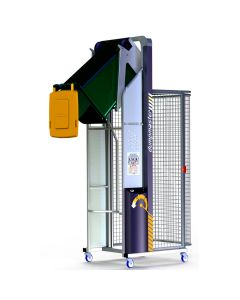
Dumpmaster® Hydraulic Bin Dumper
For pricing, contact us by calling 314-696-0200 or Request a Quote.
In stock
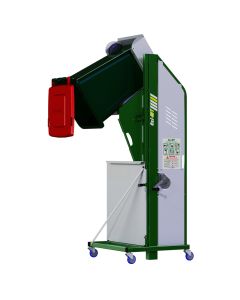
Ezi-MT® Manual Bin Dumper
For pricing, contact us by calling 314-696-0200 or Request a Quote.
In stock
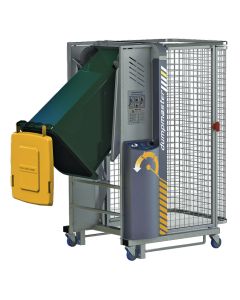
Dockmaster Hydraulic Bin Dumper, 27.5" tip height
For pricing, contact us by calling 314-696-0200 or Request a Quote.
In stock
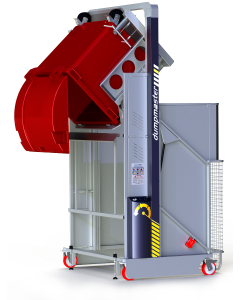
MegaDumper® Hydraulic Bin Dumper
For pricing, contact us by calling 314-696-0200 or Request a Quote.
In stock